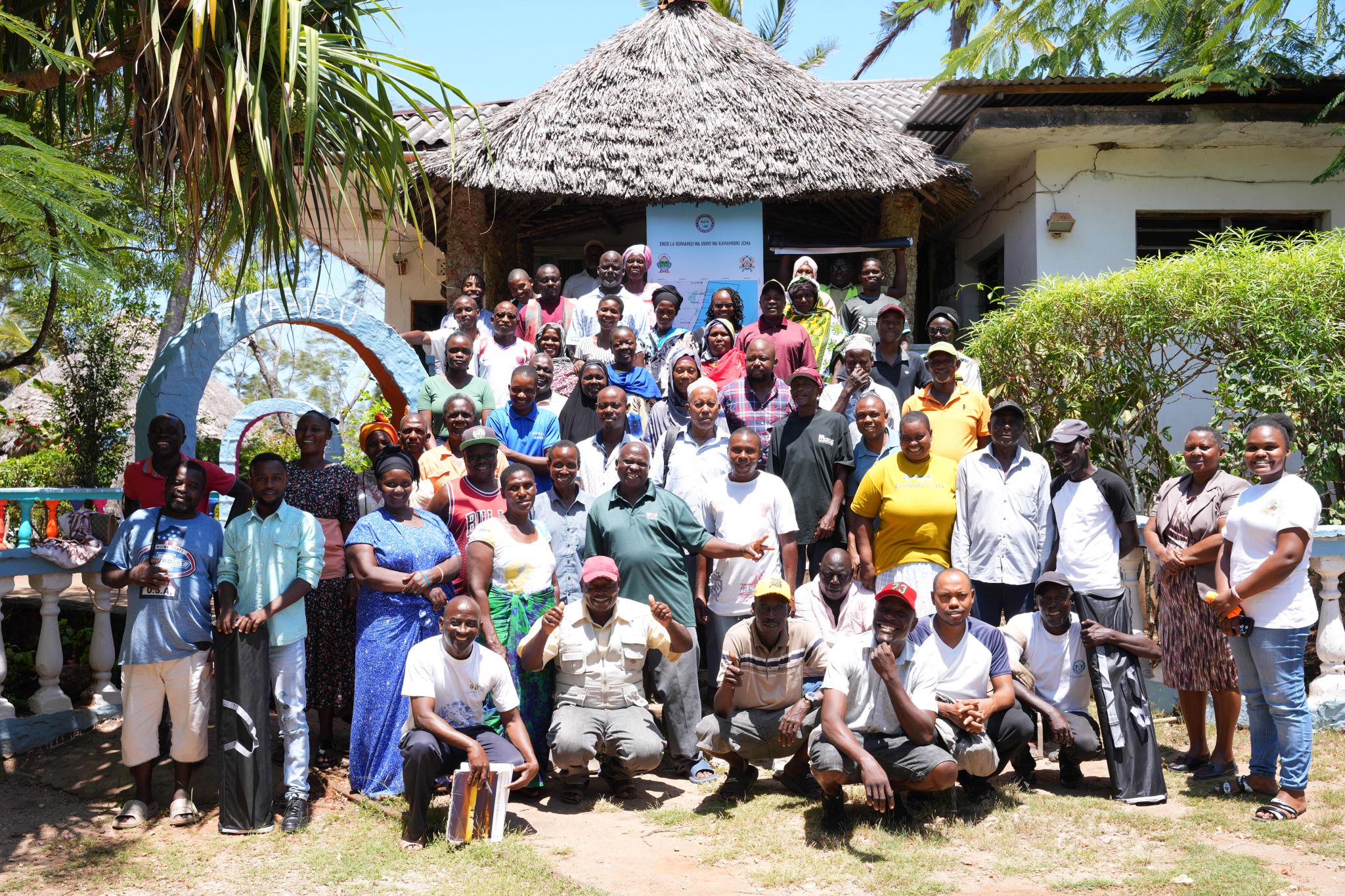
Where the Model Was Born
The Kuruwitu Partnership
& Living Classroom
A 20-year journey of community-led marine conservation. The story of how Kuruwitu's fishers created Kenya's first Community Conservation Area and built a living laboratory for ocean stewardship.
Kuruwitu is where the model was born and where most of Oceans Alive's demonstration and learning activity still takes place.
Kuruwitu is a living classroom. Within it we run coral-restoration demonstrations, reef and intertidal learning, fisheries and co-management education, school visits, local and international student programs, internships and engagement with community practitioners. This work is undertaken in close collaboration with the Kuruwitu-CBO, the Kuruwitu BMU, local practitioners, schools and technical partners. Oceans Alive acts as a facilitator and program partner.
The Beginning
The Origin & Leadership of Kuruwitu
In the early 2000s, Kuruwitu's fishers saw their catch declining year after year. Instead of waiting for outside intervention, they took action themselves.
Led by local community leaders and fishermen, the Kuruwitu Conservation and Welfare Association (KCW-CBO) was formed. In 2003, they established Kenya's first Community Conservation Area (CCA) - a voluntary no-take zone managed entirely by the community.
This wasn't a project imposed from outside. It was born from local wisdom, driven by local leadership, and sustained by local commitment. The fishers of Kuruwitu decided their future - and created a model that would inspire conservation efforts across Kenya's coast.
Key Milestones
CCA Established
Community creates Kenya's first voluntary no-take zone
Fish Biomass +400%
15 years of data proves the community's approach works
Co-Management Plan
Kenya's first legal Co-Management Agreement
Who Does What
The Partnership Structure
Kuruwitu's success is built on clear roles, mutual respect, and collaborative action. Each partner brings distinct expertise and authority.
Kuruwitu Conservation & Welfare CBO
Community Leadership & Ownership
- •Founded and led by Kuruwitu community members
- •Initiated the CCA and drives conservation action
- •Manages community welfare and local initiatives
- •Holds knowledge and decision-making authority
Kuruwitu Beach Management Unit
Fisheries Governance & Enforcement
- •Legally recognized fisheries governance body
- •Co-signatory to the Co-Management Plan
- •Enforces fishing regulations and closure zones
- •Liaises with Kenya Fisheries Service
Oceans Alive Foundation
Facilitator & Technical Partner
- •Facilitates learning programmes and demonstrations
- •Documents results and shares lessons learned
- •Provides technical support (coral restoration, monitoring)
Oceans Alive acts as a facilitator and programme partner, not as the owner of the learning site. All work is undertaken in close collaboration with the KCW-CBO, Kuruwitu BMU, local practitioners, schools, and technical partners.
Learning in Action
Kuruwitu as a Living Classroom
From local school visits to international student programmes, Kuruwitu hosts hands-on learning experiences in marine conservation and community-led stewardship.
Coral Restoration Demonstrations
Practical training in coral gardening techniques and reef rehabilitation
Reef & Intertidal Learning
Guided snorkeling, tide pool exploration, and marine ecology education
Fisheries Education
Understanding sustainable fishing practices and marine resource management
Co-Management Training
Learning how communities and government can govern fisheries together
School Visits
Coastal schools connect with their ocean through field trips and activities
Student Programmes
Local and international students conduct research and build capacity
Internships
Graduate and undergraduate placements in conservation fieldwork
Practitioner Exchange
Community practitioners from other sites learn the Kuruwitu approach
Monitoring & Data
Training in ecological monitoring, data collection, and citizen science
Governance Framework
Legal & Management Context
The Kuruwitu closure began as a voluntary community initiative. Over two decades, it evolved into a legally recognized governance model.
In 2022, the Kuruwitu Co-Management Area became Kenya's first legal Co-Management Plan under the Fisheries Management and Development Act (2016). This milestone placed 12,000 hectares of ocean under formal community stewardship.
The Co-Management Plan is a binding agreement between:
- →The Kuruwitu BMU (community governance)
- →Kenya Fisheries Service (state authority)
- →Kenya Wildlife Service (protected area management)
This framework gives the community legal standing to enforce rules, participate in decision-making, and co-manage marine resources alongside government.
What the Co-Management Plan Covers
- 1Boundaries and zoning of the Co-Management Area
- 2Rules for the no-take closure and fishing zones
- 3Enforcement mechanisms and penalties
- 4Roles and responsibilities of each partner
- 5Decision-making processes and dispute resolution
- 6Monitoring, reporting, and adaptive management
A National Precedent
Kuruwitu's Co-Management Plan is being used as a template for other coastal communities across Kenya seeking to formalize community-led marine governance.
Visit the Living Classroom
Interested in learning programmes, research partnerships, or visiting Kuruwitu? Get in touch to explore opportunities.